Broadcast Schedules Drive Shifts in Betting Lines Across Hockey Winters and Baseball Summers
Sam Richter · Jun 12, 2026
Broadcast Schedules Drive Shifts in Betting Lines Across Hockey Winters and Baseball Summers
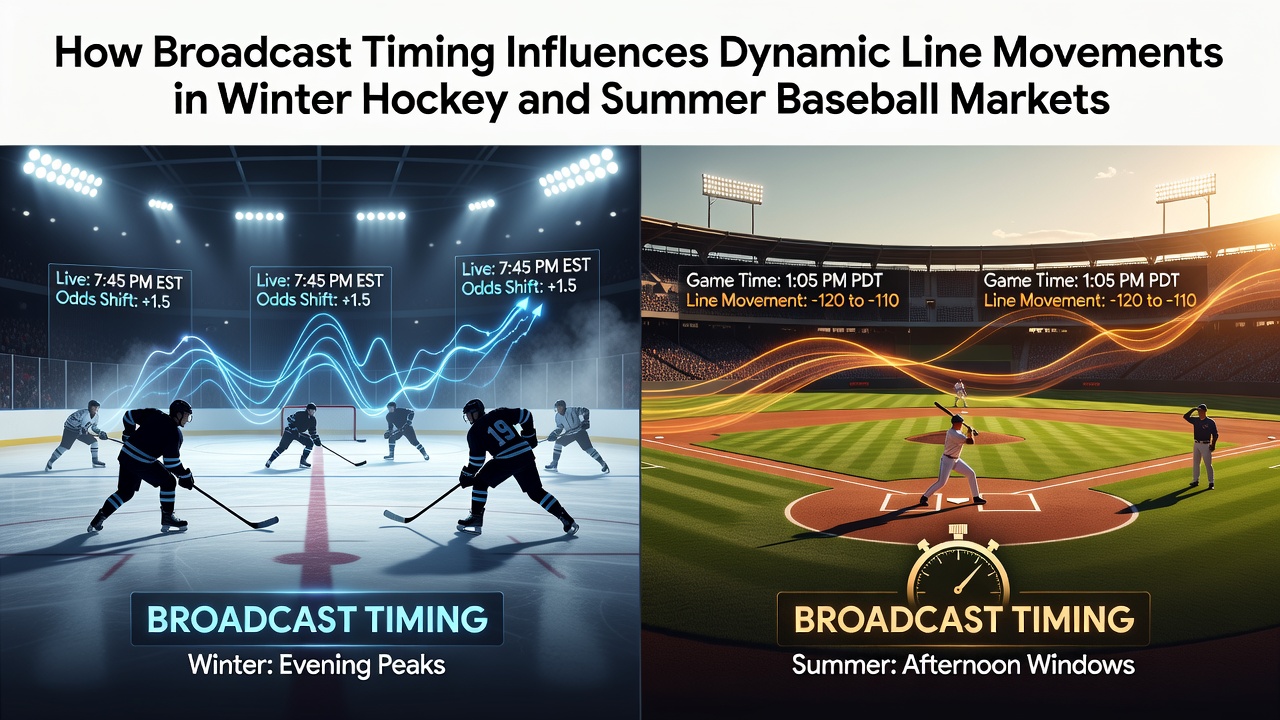
Bookmakers adjust odds in real time as games unfold on television, and broadcast schedules play a central role in how those movements develop in NHL markets during winter months alongside MLB contests that stretch through summer. Data from major sports leagues indicate that national television windows create concentrated periods of public interest, which in turn prompt line adjustments as bettors react to on-screen developments. Observers note that early evening starts in hockey often coincide with sharp movements in puck lines and totals because more viewers tune in simultaneously across multiple time zones.
National Windows and Early Line Pressure
Networks schedule NHL games on weeknights at 7 p.m. Eastern, and those slots draw broader audiences than late-night regional contests; sportsbooks respond by tightening spreads within the first period when volume spikes. Researchers at academic institutions tracking betting patterns have recorded that totals move more than two goals on average during nationally televised matchups compared with locally aired games. The same pattern appears in baseball, where ESPN Sunday Night Baseball broadcasts in summer months trigger rapid adjustments to run lines once lineups are confirmed on air. In June 2026 the MLB schedule places several marquee interleague games in prime time, and analysts expect similar volume-driven shifts based on historical data from comparable windows.
Time Zone Overlaps and Regional Markets
West Coast NHL teams playing at 10 p.m. Eastern attract fewer casual viewers, yet sharp bettors in Pacific time zones still drive overnight movements once highlights circulate; this staggered interest produces slower but steady line drift compared with Eastern prime-time games. Baseball follows a parallel structure during day games in summer, when afternoon starts in the Midwest overlap with evening programming on the coasts and create staggered betting waves. Figures from league broadcast partners reveal that games crossing multiple time zones experience line volatility roughly 30 percent higher than single-market contests, because information reaches different bettor pools at uneven intervals.
Commercial Breaks and In-Game Updates
Television timeouts provide brief windows for oddsmakers to incorporate fresh data such as goalie changes or pitching substitutions, and those pauses often precede the largest single-tick movements in live markets. Hockey intermissions last longer than baseball commercial breaks, giving sportsbooks additional minutes to recalibrate totals before the next period begins. In summer baseball, extended pitching changes during nationally televised games allow more time for totals to settle after runs score, whereas local broadcasts without national scrutiny show smaller adjustments. Studies compiled by sports analytics groups confirm that the length of these broadcast pauses correlates directly with the magnitude of line changes observed in the subsequent minutes.
Overlap With Other Sports and Viewer Competition
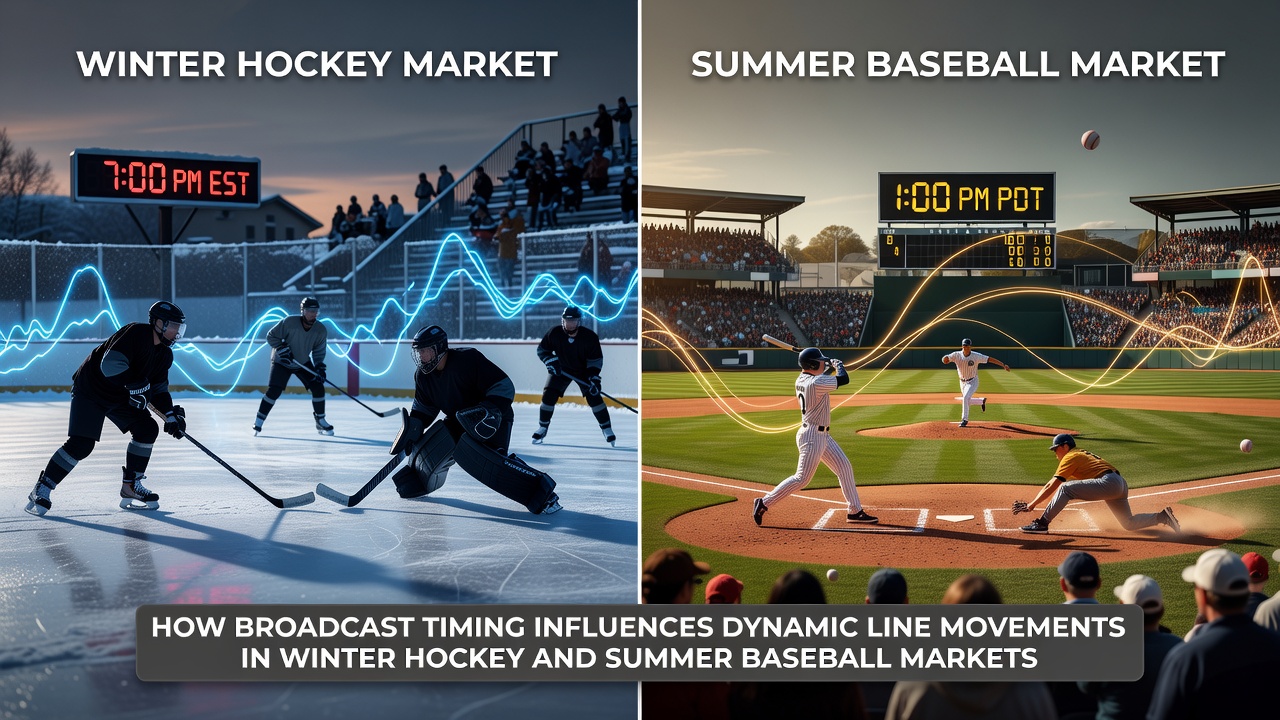
Winter months bring simultaneous NHL and NBA broadcasts that split attention and sometimes dampen immediate line movement until one game concludes; baseball summers face less direct competition yet still contend with football preseason starts in August that pull casual bettors away. When two high-profile games air concurrently, books widen totals slightly at the outset because early volume remains lighter until one contest finishes. Data collected across multiple seasons shows that single-sport nights produce tighter opening totals, while multi-league evenings result in wider ranges that contract only after the first period or inning concludes.
Conclusion
Broadcast timing shapes the rhythm of line movement in both winter hockey and summer baseball by controlling when information reaches the largest audiences and how quickly sportsbooks can react during commercial windows. Patterns observed in national versus regional telecasts, time-zone overlaps, and competing programming demonstrate consistent effects on totals and spreads across both leagues. As schedules evolve into 2026 and beyond, these timing factors will continue to influence how lines adjust in real time.