Exploring Scoring Trends at High-Altitude Sports Facilities in Professional Leagues
Morgan Beck · Jun 8, 2026

Exploring Scoring Trends at High-Altitude Sports Facilities in Professional Leagues
High-elevation venues create distinct conditions that influence ball trajectory and player performance across multiple sports, and data collected from various leagues illustrates measurable shifts in scoring when games move above 3,000 feet. Researchers have tracked these patterns for decades because reduced air density at altitude allows objects like baseballs and footballs to travel farther while also accelerating fatigue in athletes unaccustomed to lower oxygen levels.
Coors Field in Denver sits at 5,280 feet and consistently ranks among the highest-scoring ballparks in Major League Baseball history, with home run totals and extra-base hits rising noticeably compared to sea-level stadiums. Similar effects appear in the National Football League where the Denver Broncos host opponents at Empower Field at Mile High, where passing yards per game often exceed league averages during the regular season.
Physical Mechanisms Behind Altitude-Driven Scoring Changes
Air density drops approximately 12 percent at 5,000 feet compared to sea level, and this reduction decreases drag on projectiles, which means fly balls carry 5 to 10 percent farther according to aerodynamic models used by league statisticians. Pitchers must adjust release points and grip pressure because breaking pitches lose lateral movement, resulting in higher batting averages on balls in play at elevated parks. In football the same thinner air allows kickoffs and punts to travel additional yards, altering field position strategies that teams employ during away contests.
Physiological data from sports medicine studies reveals that visitors experience a 5 to 8 percent drop in aerobic capacity during the first 24 hours after arrival, while local athletes develop partial adaptations over repeated exposures. These adjustments translate into fewer turnovers and sustained fourth-quarter output for home squads in both baseball and football schedules.
League-Specific Data Patterns Across Seasons
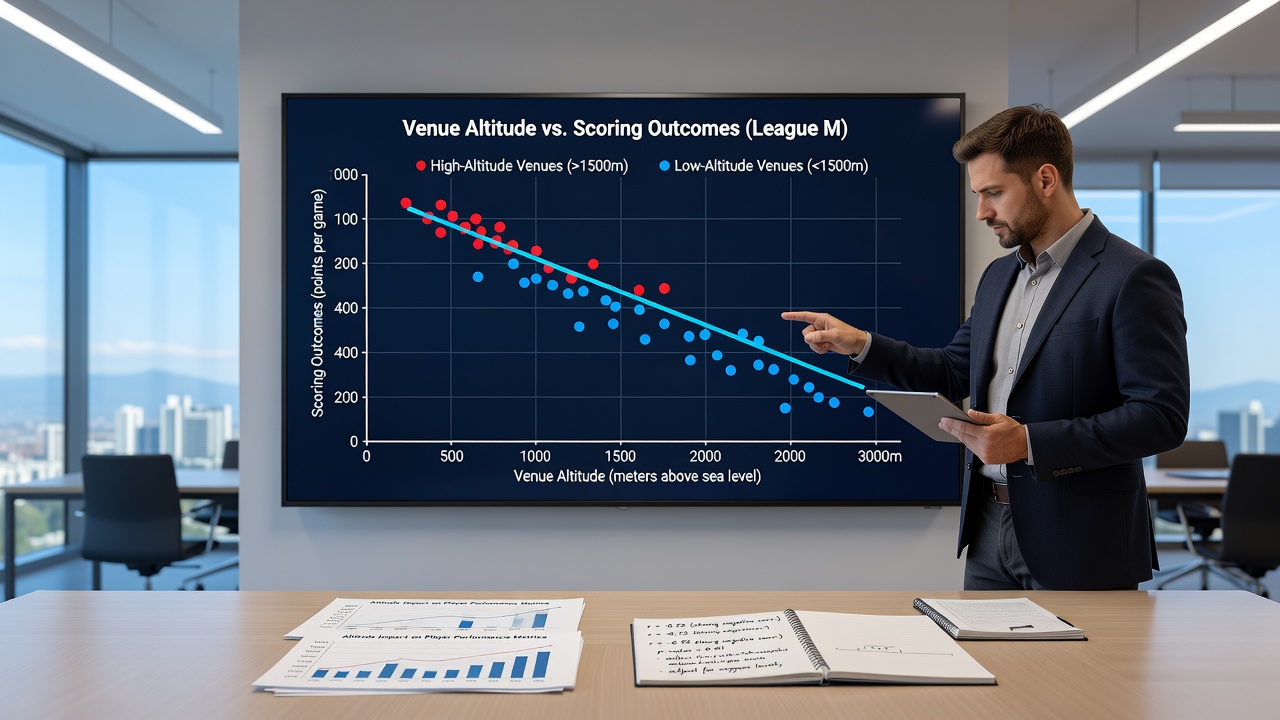
MLB tracking since 1995 shows Coors Field producing 1.8 more runs per game than the league average, while other mountain venues such as Chase Field in Phoenix at 1,082 feet demonstrate milder but still detectable increases in offensive production. NFL records indicate that Broncos home games feature 3.2 additional points per contest on average when compared to their road performances at lower elevations, and these margins hold across multiple decades of statistical review.
International soccer matches at high venues including Estadio Hernando Siles in La Paz, Bolivia, at 11,942 feet have recorded goal totals 15 percent above typical match averages during FIFA-sanctioned events, although governing bodies sometimes mandate acclimatization periods to mitigate extreme effects. Australian rules football and rugby contests in elevated regions of South Africa and South America display parallel trends where scoring spikes correlate directly with venue height measurements.
Adjustments Teams Implement in Response to Elevation
Coaching staffs prepare by arriving early for acclimatization, modifying hydration protocols, and altering substitution patterns to preserve player energy reserves. Pitching coaches in baseball emphasize sinker and changeup usage over breaking balls, while football defensive coordinators emphasize zone coverage schemes that account for extended passing windows created by reduced drag. Equipment managers also modify football inflation pressures and baseball storage practices because humidity and temperature interact with altitude to influence grip and seam behavior.
Statistical services maintained by league offices compile venue-specific splits that isolate altitude effects from other variables such as weather and surface type, and these datasets become reference points for roster construction and travel planning. In June 2026 several interleague series are scheduled at Coors Field, providing fresh data points that analysts will compare against historical benchmarks to refine predictive models.
Broader Research and Measurement Standards
Studies published through academic channels including work from the University of Colorado Sports Medicine Program quantify how cardiac output and blood oxygen saturation decline at elevation, and these findings inform training regimens used by professional organizations worldwide. Government agencies such as the National Oceanic and Atmospheric Administration supply precise barometric pressure readings that teams cross-reference with game logs to isolate environmental contributions to scoring variance.
Industry reports from sports analytics firms further segment performance metrics by elevation bands, revealing that venues between 4,000 and 6,000 feet produce the steepest scoring gradients while locations above 8,000 feet introduce compounding fatigue factors that can suppress offensive output despite favorable ball flight conditions.
Conclusion
Venue altitude continues to shape scoring outcomes across professional leagues because measurable changes in air density and athlete physiology create consistent, replicable advantages for teams familiar with those environments. Ongoing data collection from scheduled contests through 2026 and beyond will allow researchers to refine these correlations and help organizations optimize preparation strategies for elevated matchups.