How Injury Timelines Influence Championship Markets Across Professional Leagues
Iris Krause · Jun 17, 2026
How Injury Timelines Influence Championship Markets Across Professional Leagues
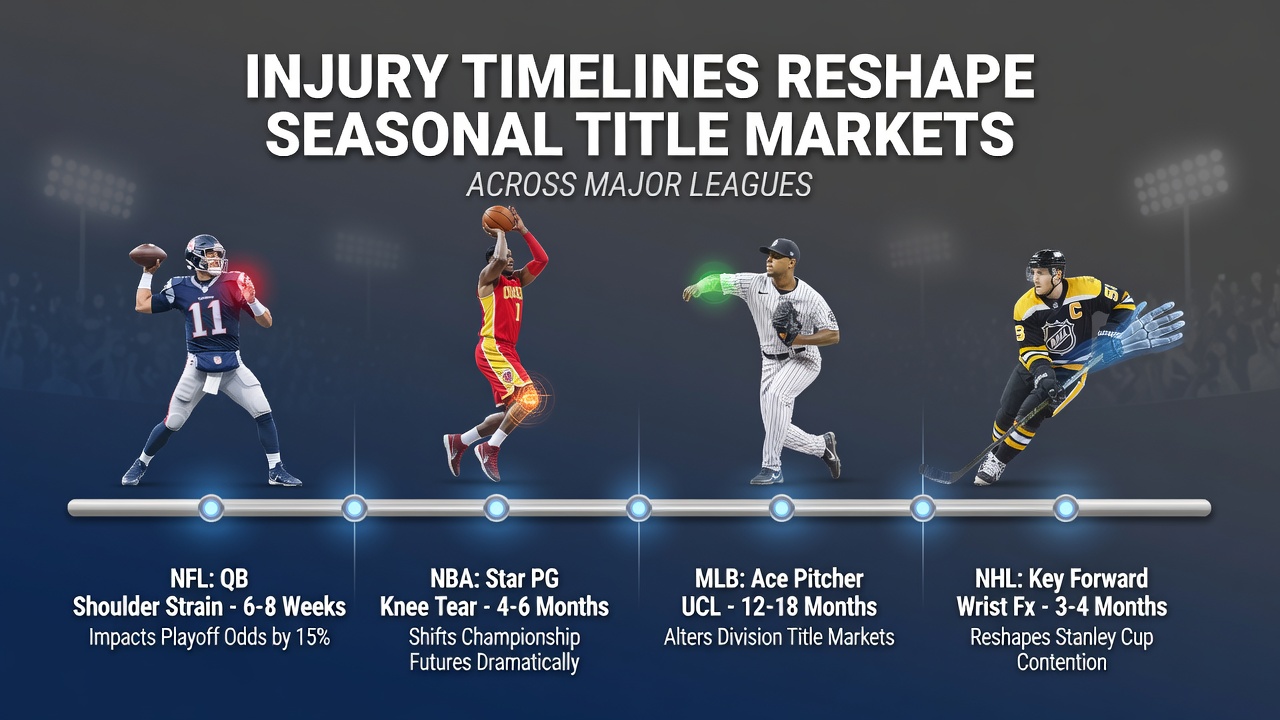
Professional sports leagues see dramatic shifts in seasonal title markets whenever key players face extended absences, and injury timelines play a central role in how oddsmakers adjust futures prices throughout a campaign. Data from recent seasons shows that when a star athlete suffers a season-altering injury, betting markets for championships often move several percentage points within hours of official announcements, and these adjustments reflect both the immediate loss of production plus the projected recovery window that follows.
Leagues such as the NBA, NFL, MLB, and NHL each handle injury reporting differently, yet the underlying market reaction follows similar patterns across all of them. Teams with concentrated talent around one or two pivotal performers experience the sharpest swings, while deeper rosters absorb setbacks with smaller market corrections. Observers note that June 2026 marks a critical stretch for several leagues where playoff positioning and title odds converge, making late-season injuries particularly influential on remaining futures wagers.
NBA Title Markets React Quickly to Extended Absences
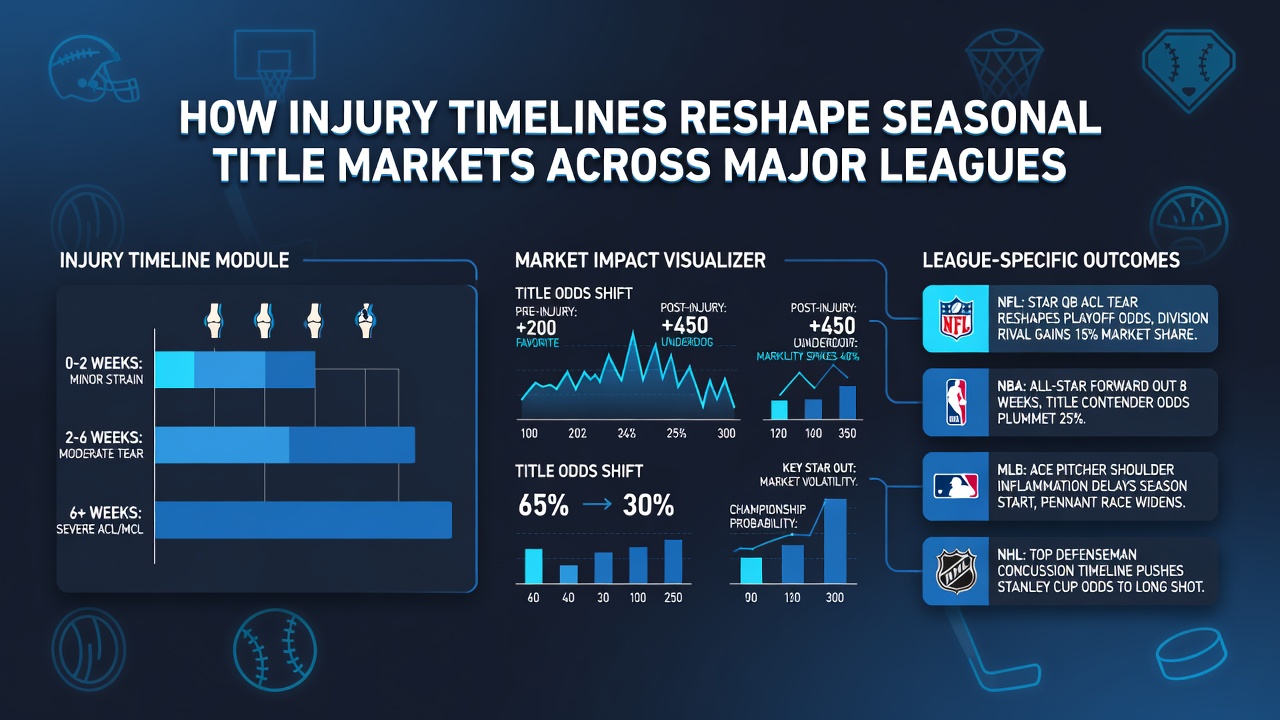
The NBA maintains detailed injury reports that feed directly into futures pricing, and markets tend to recalibrate fast once a timeline emerges for a franchise cornerstone. When a player faces four to six weeks on the sideline, oddsmakers typically widen the gap between contenders and pretenders by several points in implied probability. Studies tracking championship futures reveal that teams losing their primary scorer or playmaker for extended periods see their title odds lengthen by an average of 15 to 25 percent depending on roster depth and schedule remaining.
What's interesting is how recovery projections influence not just the current season but future betting windows as well. A torn ligament that sidelines a player until the following February forces bettors and books alike to reassess long-term title windows, and these recalibrations often create value opportunities in futures that span multiple seasons. Data indicates that franchises with strong medical and training staffs sometimes mitigate these swings better than others, keeping market reactions contained even after significant injuries.
NFL Futures Adjust Around Quarterback and Skill Position Timelines
The NFL presents a distinct challenge because its short regular season amplifies the weight of each game, and quarterback injuries in particular trigger some of the largest single-day moves in title markets. When a starting signal-caller receives a multi-week timeline, futures on that franchise can shift dramatically within the same afternoon, and correlated markets for conference winners move in tandem. Research compiled across multiple seasons shows that teams losing their quarterback for four or more games see title odds lengthen by roughly 30 percent on average, with even larger moves when the backup lacks comparable experience.
Skill-position injuries produce smaller but still measurable effects, especially in offenses built around a single running back or wide receiver. Bettors who monitor practice reports and official injury designations gain an edge because these details surface before markets fully incorporate them. And because NFL title futures often remain active deep into the postseason, any injury that stretches beyond a single month continues to influence pricing well after initial announcements.
MLB and NHL Markets Respond to Pitching and Goaltending Setbacks
Baseball futures hinge heavily on starting pitching health, and an ace pitcher placed on the injured list with a multi-month timeline can reshape division and World Series markets almost overnight. Historical figures reveal that teams losing a top-three starter for 60 days or longer experience measurable drops in implied championship probability, particularly when bullpen resources are already stretched. Position-player injuries produce more muted reactions unless they involve multiple everyday contributors at once.
The NHL mirrors this emphasis on specialized positions, with goaltender injuries driving outsized moves in Stanley Cup futures. A starting netminder expected to miss six weeks or more often forces immediate repricing across an entire conference market, while forward or defenseman absences create narrower adjustments. Those who follow daily reports from team medical staffs find that early timeline estimates frequently get revised, and each update can trigger secondary waves of market movement that persist for several days.
Cross-League Patterns and Recovery Data
Across all four major leagues, certain recovery benchmarks appear repeatedly in how markets price remaining title chances. Injuries projected at under three weeks rarely produce lasting odds shifts, whereas anything beyond six weeks tends to generate sustained movement until the player returns or the season ends. According to findings published by the American Journal of Sports Medicine, consistent patterns emerge in how roster construction either buffers or magnifies these effects, with organizations that maintain strong farm systems or bench depth experiencing smaller market corrections overall.
International governing bodies such as those overseeing Olympic athlete health data have also contributed comparative studies that sportsbooks reference when modeling long-term injury impacts. These sources help quantify how different sports stress specific joints and muscle groups, allowing more precise timeline forecasts that feed into futures pricing models. Bettors tracking public injury databases alongside official league reports gain additional context that sometimes precedes market adjustments by several hours.
Conclusion
Injury timelines serve as one of the most consistent drivers of movement in seasonal title markets, and their influence spans every major professional league with only minor variations in magnitude. Teams that suffer prolonged absences from star contributors see their championship odds adjust in predictable ways, while deeper organizations limit the scope of those shifts through roster flexibility. As June 2026 approaches and multiple league calendars reach critical junctures, the interplay between medical updates and futures pricing will continue to shape how markets value remaining contenders across the NBA, NFL, MLB, and NHL.