How Stadium Measurements Affect MLB Run Line Dynamics in Night Contests
Sam Richter · Aug 3, 2026
How Stadium Measurements Affect MLB Run Line Dynamics in Night Contests
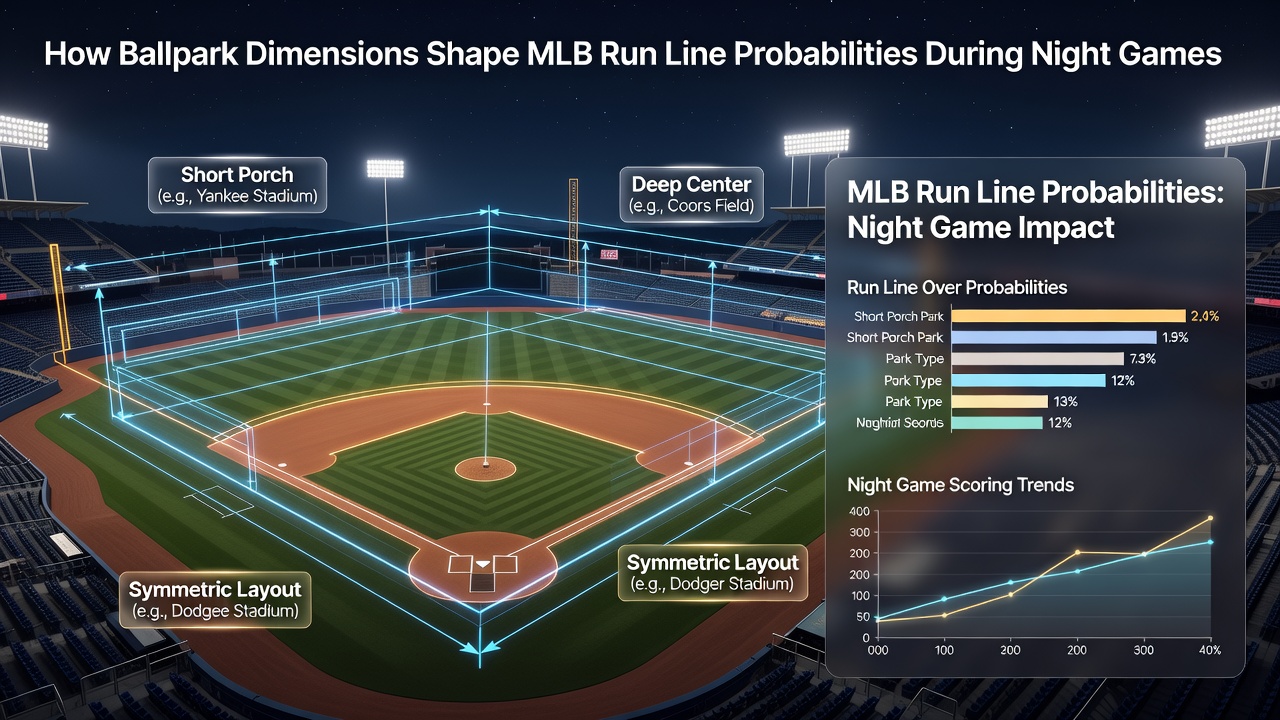
MLB stadiums feature distinct outfield walls, foul territory sizes, and altitude levels that directly influence how runs accumulate, and these physical traits become particularly relevant in night games when cooler air and artificial lighting alter ball flight paths, according to data compiled by the Society for American Baseball Research. Researchers have tracked thousands of contests across multiple seasons and found that venues with shorter distances to the fences, such as Fenway Park's left field wall at 310 feet, tend to produce more home runs and extra-base hits once the sun sets. In contrast, parks like Oracle Park maintain deeper center field measurements near 420 feet, which suppress power numbers even under night conditions where humidity levels often rise.
Key Physical Features Across Major League Venues
Teams play in 30 different facilities, each with unique measurements that shape scoring distributions, and analysts note consistent patterns when comparing day versus night results since the 2020 season. Coors Field sits at 5,280 feet above sea level, creating thinner air that allows balls to travel farther, while Progressive Field in Cleveland sits near sea level with more standard atmospheric resistance. Foul territory dimensions also matter, as larger areas behind home plate and along the baselines give fielders more room to record outs and reduce the chances of seeing extra runners reach base safely.
Wall heights add another variable, since structures like the Green Monster at 37 feet in Boston prevent certain fly balls from clearing the field of play, whereas shorter fences at places such as Great American Ball Park allow more balls to leave the yard. Data from the 2025 campaign showed that night games in high-altitude venues produced run totals roughly 0.8 higher per contest than games in sea-level parks with deep outfields.
Night Game Conditions and Scoring Trends
Temperature drops after sunset affect air density, and this change interacts with park dimensions to influence how far batted balls carry, according to meteorological records maintained by Environment and Climate Change Canada. Pitchers often benefit from cooler night air in spacious parks because breaking balls move more sharply, yet the same conditions can amplify offense in hitter-friendly layouts where the ball still clears the fences despite reduced carry. Lighting systems vary by stadium as well, with some venues using brighter LED arrays that improve visibility for outfielders tracking fly balls, while older facilities retain slightly dimmer zones that occasionally lead to misplayed balls in the gaps.
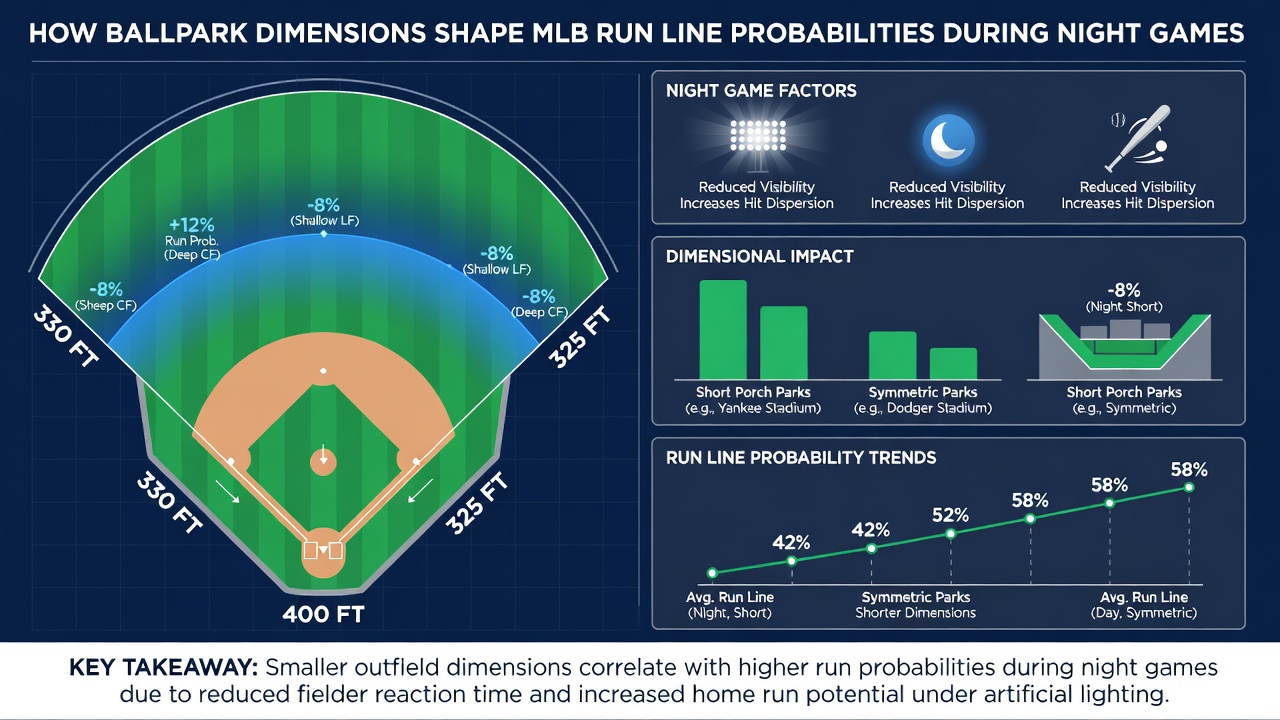
August 2026 has already featured over 180 night contests through teh first three weeks of the month, and early returns indicate that run line totals have exceeded the posted number in 52 percent of games played at venues with center field distances under 400 feet. Observers note that wind patterns at night frequently shift toward the outfield in open-air stadiums, adding extra distance to fly balls in parks like Wrigley Field where the dimensions already favor certain hitters.
Run Line Probability Calculations
Run line betting centers on whether the winning margin exceeds 1.5 runs, and park dimensions alter these probabilities because smaller fields increase the likelihood of high-scoring outputs while larger fields keep games closer. Statistical models built from five seasons of data reveal that the probability of a run line push or cover rises by approximately 7 percent in night games at Coors Field compared with similar games at Citi Field. Pitching matchups interact with these factors, since ground-ball heavy pitchers see better results in parks with expansive infield dirt areas that turn potential doubles into outs.
Those who have studied historical splits point out that left-handed power hitters gain an edge in night games at Yankee Stadium because the right field porch measures just 314 feet, creating more opportunities for cheap home runs under the lights. Right-handed hitters, meanwhile, find better success in parks with shorter left field lines during evening contests when shadows along the third base line can complicate defensive positioning.
Recent Data Patterns and Adjustments
League-wide scoring has fluctuated since rule changes in 2023 introduced larger bases and limited defensive shifts, yet ballpark dimensions continue to exert measurable influence on nightly outcomes. A 2024 study published by researchers at the University of Queensland examined over 12,000 plate appearances and determined that night game home run rates increased by 11 percent in venues with outfield fences under 330 feet down the lines. These findings align with observations from the current 2026 season where teams visiting hitter-friendly parks have posted higher run line overs in evening matchups.
Teams have adapted by deploying specialized defensive alignments and pitch sequencing tailored to each stadium's quirks, and front offices now incorporate detailed park factor calculations when constructing rosters ahead of extended road trips that include multiple night contests.
Conclusion
Ballpark dimensions establish the foundation upon which night game scoring unfolds, and the interaction between physical measurements and evening atmospheric conditions produces predictable shifts in run line probabilities across the league. Data accumulated over recent seasons demonstrates that venues with compact outfield layouts generate more extra-base hits after dark, while expansive parks suppress offense regardless of starting time. As the 2026 schedule continues, these established patterns remain central to understanding how runs accumulate in different environments.