Seasonal Weather Fluctuations Shaping Team Sports Betting Outcomes
Morgan Beck · Aug 5, 2026
Seasonal Weather Fluctuations Shaping Team Sports Betting Outcomes
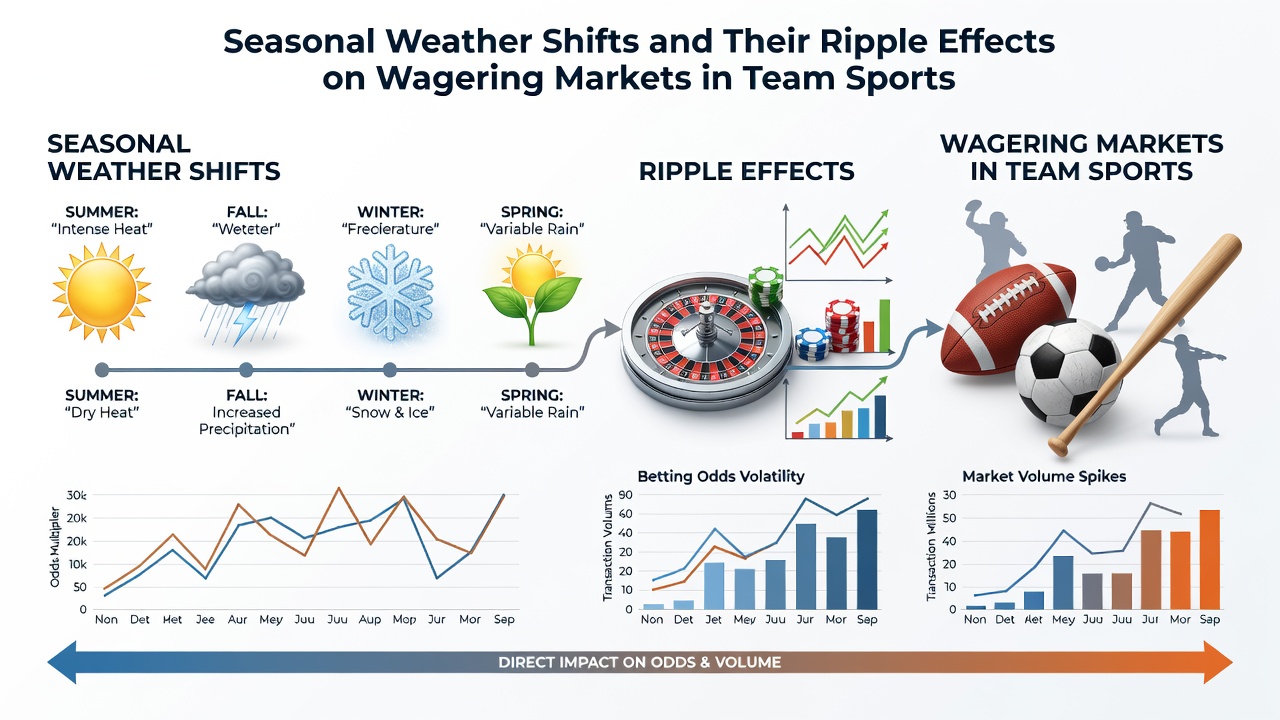
Seasonal weather shifts create measurable changes in game conditions across major team sports and those adjustments flow directly into wagering markets where lines move in response to updated forecasts and historical performance data under similar conditions. Observers note that leagues such as the NFL and MLB see the clearest effects because their schedules place teams outdoors during periods of rapid climate transition while the NBA and NHL experience indirect influences through travel disruptions and arena climate control demands.
Weather Patterns and Game Condition Data
Data collected by national meteorological agencies shows that temperature swings of more than fifteen degrees between early and late season games alter player performance metrics in measurable ways with passing accuracy in football dropping when wind speeds exceed twelve miles per hour and batting averages in baseball declining during high humidity periods that affect grip and ball flight. Researchers tracking these variables across multiple seasons have documented consistent statistical shifts that sportsbooks incorporate into their models when setting opening lines and in-game adjustments.
August 2026 arrives with forecasts indicating above-average precipitation across the Midwest and Northeast corridors where several NFL training camps and early preseason contests take place and those projections already appear in early futures market pricing for divisional standings and player prop totals. Sportsbooks monitor National Weather Service updates and adjust totals downward when rain is expected because historical records indicate scoring decreases by an average of three points per game under wet conditions.
Market Adjustments in Football and Baseball
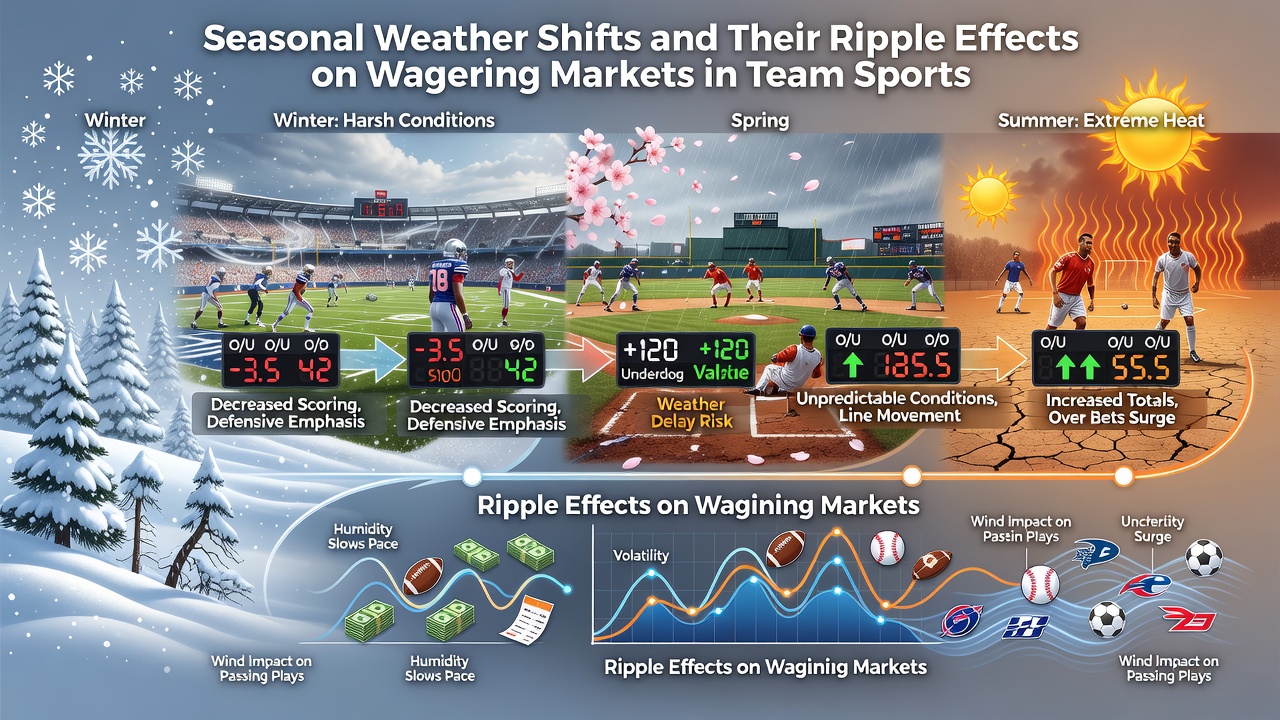
Football markets react quickly to weather bulletins because outdoor stadiums expose players to wind, precipitation, and field surface changes that favor certain play styles over others. Totals lines move first when heavy rain or snow is forecast while spread markets shift more gradually as bettors weigh how a team's running game or defense might benefit from reduced passing efficiency. Studies of NFL regular season games since 2015 reveal that underdog cover rates increase by roughly four percentage points in games played at temperatures below thirty-five degrees compared with neutral conditions.
Baseball presents a different set of variables because rain delays and wind direction directly affect starting pitcher usage and bullpen management. When forecasts call for gusts exceeding fifteen miles per hour at open-air venues, run totals are frequently revised downward and the market on strikeout props for fly-ball pitchers sees corresponding movement. MLB data compiled over the past decade indicates that games played in humidity levels above seventy percent produce on-base percentages approximately eight points lower than league averages for the same teams.
Indirect Effects on Indoor Leagues and Travel
Although the NBA and NHL play primarily indoors, seasonal weather still influences their wagering markets through travel delays, flight cancellations, and back-to-back scheduling complications that arise during winter storms or summer heat waves. Performance data shows elevated fatigue markers and higher injury rates following disrupted travel days and sportsbooks have begun incorporating flight delay statistics into their pregame models for those leagues. Observers tracking these patterns report that totals in games following major weather events trend slightly lower as teams play at reduced pace.
International team sports such as soccer also demonstrate weather sensitivity in markets tied to European and South American leagues where monsoon seasons and extreme heat periods alter match tempo and goal scoring rates. Bettors who follow these circuits often reference regional climate reports when assessing totals and player goal props because the data reveals repeatable patterns across multiple campaigns.
Information Sources and Line Movement Tracking
Industry participants rely on meteorological datasets from agencies including the National Oceanic and Atmospheric Administration to quantify weather impacts and cross-reference those figures with play-by-play logs maintained by sports analytics organizations. Line movement records maintained by multiple sportsbooks indicate that roughly sixty percent of weather-related adjustments occur within forty-eight hours of game time once updated forecasts become available. Those who monitor early line releases and subsequent weather developments can observe how markets incorporate new information without relying on subjective interpretation.
Academic research groups have examined correlations between climate variables and betting outcomes using large datasets spanning more than a decade and their findings confirm that certain weather thresholds produce statistically significant deviations from baseline performance. These studies appear in sports science journals and provide sportsbooks with additional inputs for refining their algorithms rather than serving as standalone predictive tools.
Conclusion
Seasonal weather shifts continue to influence team sport outcomes in ways that translate into observable movements across wagering markets and participants who track both meteorological forecasts and historical performance data under comparable conditions gain access to information that shapes line adjustments. As climate patterns evolve and scheduling remains fixed to traditional calendars the relationship between weather variables and market pricing is expected to remain a consistent factor in how odds are constructed and revised for outdoor team sports.