Shifts in the Odds: Roster Updates and Line Dynamics in Pro Sports
Morgan Beck · Jun 29, 2026
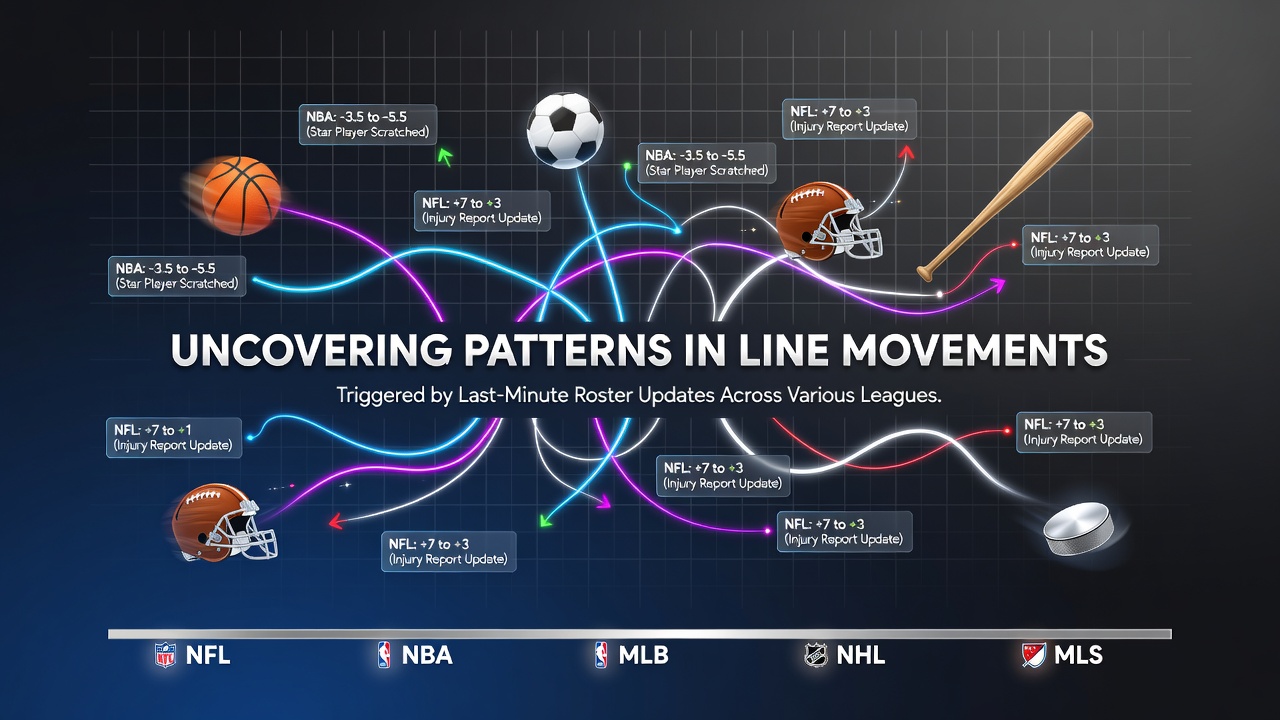
Shifts in the Odds: Roster Updates and Line Dynamics in Pro Sports
Betting markets respond quickly when teams announce roster changes at the last minute, and data from multiple seasons shows consistent patterns in how lines move across the NFL, NBA, MLB, and NHL. Observers note that sharp bettors often react first, followed by sportsbooks adjusting spreads, totals, and moneylines to balance action. Research from sports analytics groups indicates these shifts occur within minutes of official announcements on team websites or league channels.
Common Triggers Across Leagues
Last-minute roster updates typically involve injuries, scratches, trades, or suspensions, each producing measurable effects on point spreads and over-under totals. In the NFL, a starting quarterback ruled out on game day frequently moves the spread by three to seven points, while NBA teams losing a primary scorer see totals drop by four to six points on average. MLB data reveals that a late scratch for a top pitcher alters run totals more dramatically than position player changes, with lines shifting two to four runs in some cases.
Studies from the University of Nevada, Las Vegas Center for Gaming Research have tracked these movements over several seasons, finding that markets in major North American leagues absorb information faster when the news involves star players rather than role contributors. And the timing matters, because updates released less than ninety minutes before tip-off or first pitch generate larger immediate adjustments than those announced earlier in the day.
League-Specific Responses
The NBA exhibits some of the most volatile line movements because of its smaller roster sizes and emphasis on individual matchups. When a team confirms a key guard will sit out due to rest or injury management, betting lines on player props and team totals often swing within the first five minutes of the announcement. NHL markets behave differently, with goalie changes producing the strongest reactions, especially in playoff games where starting netminders carry higher leverage.
MLB lines tend to move more gradually during the regular season yet accelerate near the July trade deadline, and June 2026 provided multiple examples when several contenders announced midweek roster additions that altered projected starting lineups. Football markets, by contrast, show steadier adjustments because roster news often filters through injury reports days in advance, though Sunday morning scratches still create measurable spikes in action.

Data Patterns and Timing
Statistical reviews of betting data reveal that approximately sixty-five percent of significant line movements tied to roster news happen in the first thirty minutes after the update reaches public channels. Sharp money typically accounts for the initial wave, after which recreational bettors follow and sportsbooks widen or narrow numbers to manage exposure. Figures from industry tracking services show that totals move more frequently than spreads in basketball and hockey, whereas football and baseball display balanced reactions across both categories.
Those who've examined large datasets note that correlated prop bets, such as player points or strikeouts, experience the fastest adjustments, sometimes shifting odds by twenty to thirty percent before the main game lines stabilize. This pattern holds across different time zones, though European and Australian markets react with slightly longer lags due to broadcast schedules.
Market Efficiency and Adjustments
Betting operators employ automated systems that monitor social media, team press releases, and league notifications to detect roster developments in real time. When confirmation arrives, algorithms recalculate probabilities and push revised lines to the board, often accompanied by limits on maximum wagers until volume balances. Data from regulatory reports issued by the Alcohol and Gaming Commission of Ontario demonstrate that these rapid updates maintain overall market integrity while protecting operators from one-sided liability.
What's interesting is how secondary markets such as live betting and quarter props continue to shift even after the opening tip or first pitch, because in-game roster usage can deviate from pregame expectations. Observers tracking multiple seasons find that the largest discrepancies between pregame and live lines occur when a player returns from an announced absence or exits early with a new issue.
Conclusion
Patterns in line movements following last-minute roster updates appear consistent across the major North American leagues, driven by the speed of information flow and the relative importance of the affected player. Research continues to map these dynamics, providing clearer pictures of how markets process sudden changes and how bettors and operators alike respond to maintain equilibrium. As data collection improves, future seasons may reveal even more granular trends tied to specific positions, injury types, and timing windows.